Articles / insights / Sustainability / Water pollution / Water technology
Water Quality Month
Water Quality Month
August 19, 2026
Water Quality Month
Every August, Water Quality Month encourages us to think differently about one of our planet’s most precious resources. It is an opportunity to reflect not only on how much water we use, but also on the quality of the water we return to the environment.
The challenge facing industry has never been greater.
Freshwater represents just 0.5% of all the water on Earth, yet it underpins almost every manufacturing process, from pharmaceuticals and food production to chemicals, textiles and electronics. At the same time, global water demand is expected to increase by 20–30% by 2050, placing even greater pressure on already stretched water resources.
For decades, industry has rightly focused on reducing water consumption. Today, however, we must also focus on reusing water and removing pollutants so that we are able to do so.

'Industry can no longer afford to simply move pollution around' - Simon Gatcliffe, CEO
Compliance Should Not Be the Finish Line
To meet this focus, many manufacturers invest heavily in wastewater treatment and successfully meet their discharge permits. That is an important achievement.
However, compliance and complete treatment are not always the same thing.
Traditional treatment technologies often remove contaminants by transferring them into another waste stream. Activated carbon, ion exchange resins and membrane technologies can capture pollutants effectively, but many persistent chemicals are simply concentrated into spent media, sludge or liquid waste before being transported elsewhere for disposal or incineration.
The water leaving site may satisfy permit requirements, but the pollutants themselves have not disappeared.
As an industry, we need to begin asking a more ambitious question than “Have we met our permit?”. Instead, we should be asking: “Have we actually eliminated the pollution?”
Forever Chemicals Demand Forever Solutions
Few contaminants illustrate this challenge more clearly than PFAS. Often referred to as “forever chemicals”, these compounds have become a global environmental concern because of their persistence, mobility and resistance to conventional treatment methods. Increasingly, regulators, manufacturers and consumers are recognising that simply transferring PFAS into another waste stream is unlikely to represent a long-term solution.
Historically, many treatment systems have focused on removing PFAS from water before sending the contaminated media away for high-temperature incineration or specialist disposal.
Today, technology is beginning to offer something fundamentally different. Instead of simply capturing contaminants for disposal elsewhere, advanced destruction technologies can break down many organic contaminants directly within the treatment process, dramatically reducing secondary waste and helping manufacturers deal with pollution at source rather than transferring responsibility further along the waste chain.
That shift represents one of the most significant advances in industrial wastewater treatment for many years.
The Opportunity for Smarter Water Treatment
Water reuse is becoming increasingly important as water stress grows across the globe. Many countries, including the UK, are now facing water shortages and despite growing pressure on freshwater supplies only a small proportion of treated wastewater is currently being effectively reused.
If manufacturers can remove difficult contaminants more effectively, they not only improve environmental performance, but also create greater opportunities to reuse process water, reduce freshwater abstraction and lower operating costs.
The challenge is that many wastewater treatment plants were designed decades ago, long before concerns around PFAS, pharmaceutical residues, pesticides and emerging micropollutants became commonplace.
Replacing an entire treatment plant is rarely practical or necessary. In many cases, targeted tertiary treatment can address the specific contaminants that conventional processes struggle to remove, allowing existing infrastructure to continue performing while significantly improving overall treatment performance.

Targeted tertiary treatment can address the specific contaminants that conventional processes struggle to remove.
From Pollution Transfer to Pollution Destruction
At Arvia Technology, this is exactly where we focus our efforts.
Our proprietary Nyex™ technology combines adsorption with advanced oxidation, enabling difficult organic contaminants to be captured and then destroyed within the treatment process itself.
Rather than producing large quantities of contaminated carbon or other secondary waste requiring transport and incineration, the process continuously regenerates the adsorption media while oxidising pollutants, reducing waste generation and operating costs.
The technology has been successfully applied across sectors including pharmaceuticals, chemicals, agrochemicals, food manufacturing and industrial processing to remove contaminants including colour, Chemical Oxygen Demand (COD), active pharmaceutical ingredients, pesticides and PFAS-related compounds.
Since every wastewater stream is different, we always begin with detailed laboratory analysis and treatability trials, allowing manufacturers to understand precisely which contaminants remain after existing treatment and identify the most appropriate solution before investing in new infrastructure.
Water Quality Is Becoming a Competitive Advantage
The businesses leading on water quality tomorrow will not necessarily be those spending the most on treatment. They will be those asking better questions today.
- How much of our wastewater could be reused?
- Which contaminants remain after conventional treatment?
- Are we destroying pollution or simply moving it somewhere else?
As regulation tightens and pressure on freshwater resources continues to grow, these questions will become increasingly important for manufacturers across every industrial sector.
Water Quality Month reminds us that protecting our water resources is a shared responsibility.
Industry has a tremendous opportunity not only to comply with today’s standards but to lead the transition towards cleaner manufacturing, greater water reuse and technologies that genuinely eliminate pollution rather than simply transferring it elsewhere.
If we can move beyond compliance and focus on truly solving the problem, we can help protect one of the world’s most valuable resources while building more efficient, resilient and sustainable businesses at the same time.
More featured articles
05.6.2025
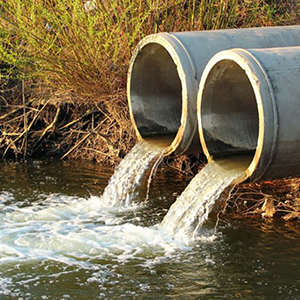
In this article we evaluate the challenges of tackling wastewater in the Chemical Industry and sustainable ways to reuse wastewater.
06.5.2026

In our latest article we discuss the importance of World Environment Day 2026, climate change and water security.
03.18.2026
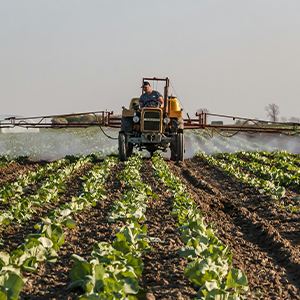
This article discusses the threats of PFAS in agriculture and how these forever chemicals are entering the food chain.
Our wastewater treatment expertise
Our water technology can be used to treat a variety of water treatment applications. Once we understand the nature of your wastewater and your final water quality target, our water treatment specialists can make recommendations as to how best to treat your water. Take a look at some of the Nyex applications here:
Need help? Speak with an expert