Articles / Agrochemicals / insights / Water reuse
The Risks of Pesticides to Pollinators
The Risks of Pesticides to Pollinators
April 29, 2026
The Risks of Pesticides to Pollinators
Pollinators play a crucial role in maintaining the health of ecosystems and agriculture. The risks of pesticides to pollinators are significant, and their impact on ecosystems can be profound. By understanding these risks and adopting sustainable practices, we can work towards protecting these vital creatures and ensuring the health of our environment and food systems.
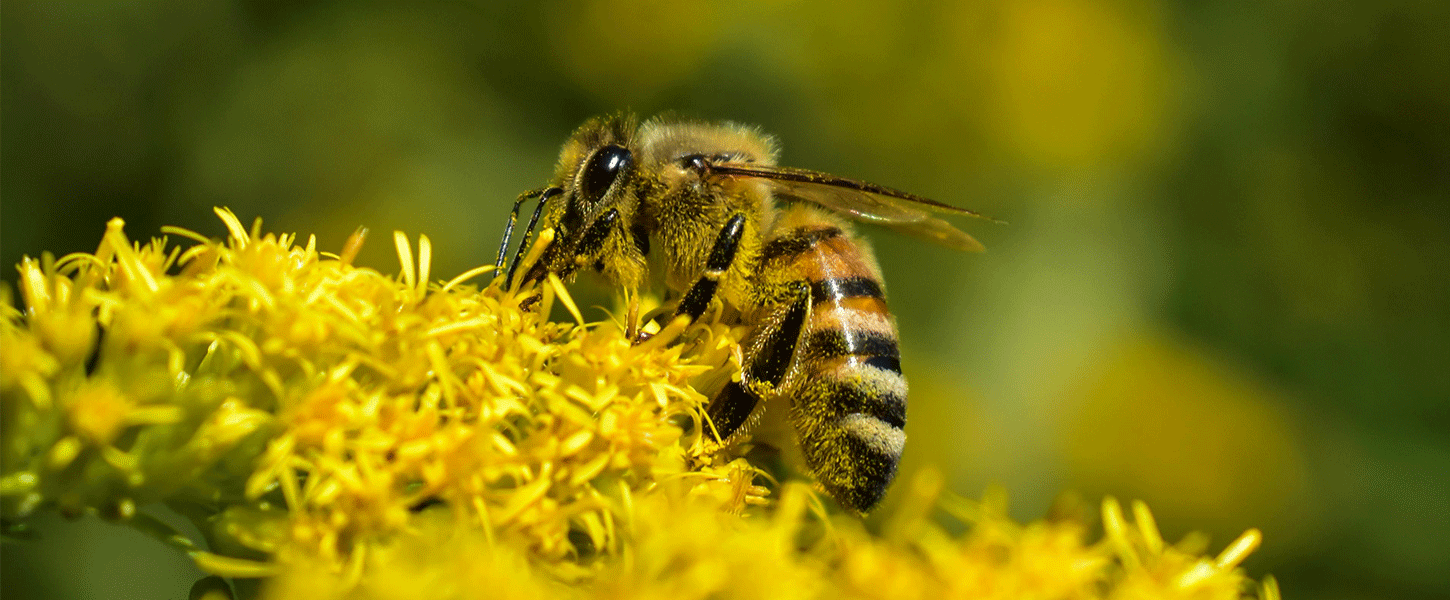
Pollinators play a crucial role in maintaining the health of ecosystems and agriculture.
Importance of Pollinators
Pollinators, including bees, butterflies, birds, and bats, are responsible for the pollination of many plants, including a large percentage of crops that humans rely on for food. This process is essential for plant reproduction, biodiversity, and food production. Without pollinators, ecosystems could face substantial disruptions, leading to decreased agricultural yields and loss of biodiversity.
Types of Pesticides
Pesticides are chemical substances used to eliminate pests that threaten crops. There are several types of pesticides, including:
- Insecticides: Target insects, including many pollinators.
- Acaricides: Target insect and mite pests feeding on crops above or below ground.
- Molluscicides: Control slugs and snails, especially in cereals, oilseed rape and vegetables.
Each type of pesticide can pose varying degrees of risk to non-target species, including pollinators.
Direct and Indirect Effects on Pollinators
Direct Effects
Pesticides can have direct toxic effects on pollinators when they come into contact with treated plants or consume contaminated nectar and pollen. These effects may include:
- Acute poisoning: Leading to immediate death or sub-lethal effects that impair the ability to forage or navigate.
- Chronic exposure: Resulting in long-term health issues, such as reduced reproduction rates or weakened immune systems.
Indirect Effects
Apart from direct toxicity, pesticides can have several indirect effects on pollinators:
- Habitat loss: The use of herbicides can reduce the availability of natural forage and nesting sites.
- Reduced floral resources: Non-target plants that provide food for pollinators may be adversely affected.
- Disruption of ecosystems: Changes in plant-pollinator interactions can alter the balance of ecosystems, affecting pollinator populations.
Neonicotinoids
Neonicotinoids are a class of insecticides that have been widely used due to their effectiveness in protecting crops. However, they have become a significant concern for pollinator health. Studies have shown that neonicotinoids can:
- Persist in the environment, leading to prolonged exposure.
- Affect the central nervous system of insects, impairing their ability to navigate and forage.
- Be present in pollen and nectar, posing a risk to bees and other pollinators.
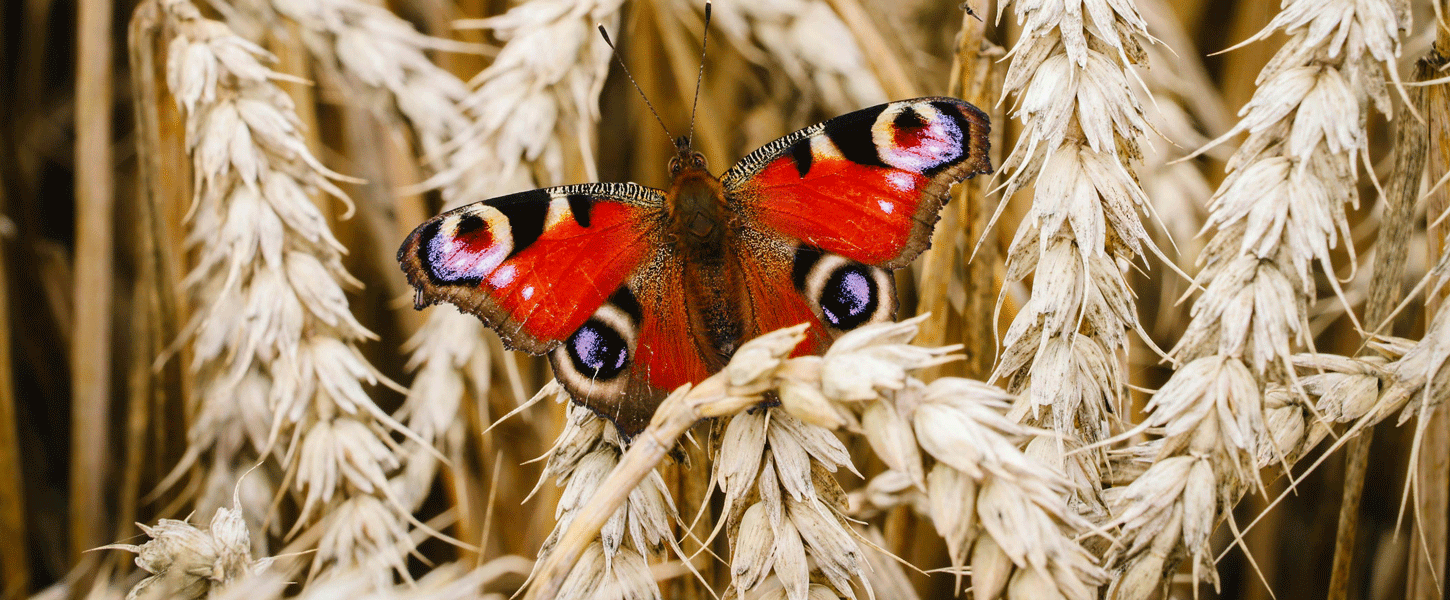
The connection between pesticides, pollinators, and wastewater is often overlooked
Pesticides, Pollinators and Wastewater
The connection between pesticides, pollinators, and wastewater is often overlooked, but it is a critical pathway through which chemical exposure spreads far beyond farms and into broader ecosystems.
After application, pesticides do not stay in situ. Rainfall, irrigation runoff, and soil leaching carry residues into drainage systems, rivers, and eventually wastewater treatment plants. Urban sources contribute as well; garden chemicals, roadside herbicides, and even residues washed off food during processing all enter the same stream.
Wastewater treatment facilities are not designed to fully remove many modern pesticides, especially persistent compounds like Neonicotinoids. As a result, trace concentrations often pass through treatment unchanged and are discharged into surface waters or accumulate in sewage sludge (biosolids), which may later be applied to agricultural land thereby creating a feedback loop.
Why this matters for pollinators
Pollinators are not just exposed in fields, they encounter contaminated water and plants in multiple environments:
- Aquatic exposure routes: Many pollinators, particularly bees, collect water from puddles, ditches, or river edges. If these sources contain pesticide residues, they become a direct ingestion pathway.
- Contaminated wild plants: When wastewater or sludge is reused in irrigation or fertilisation, pesticide residues can be taken up by non-crop plants. Pollinators feeding on these ‘wild’ flowers are then exposed even outside intensively farmed areas.
- Ecological ripple effects: Wastewater contamination also affects aquatic invertebrates, many of which are part of the same ecological networks that support pollinators. Declines in these organisms can alter food webs and reduce biodiversity, indirectly impacting pollination systems.
There are also growing concerns about chronic, low-level exposure. Even when concentrations are below lethal thresholds, long-term exposure can impair navigation, reproduction, and immunity in species like the Western honey bee. These subtle effects are harder to detect but can accumulate into population-level declines.
Compounding risks
Wastewater often contains mixtures in which pesticides combine with pharmaceuticals, heavy metals, and microplastics. These mixtures can produce synergistic toxicity, where combined effects are greater than individual ones. This complicates risk assessment, which traditionally evaluates chemicals in isolation.
How Arvia can help
When pesticides get into the groundwater, fast action is required to remove them. Many traditional water treatment processes cannot remove pesticides to low enough levels for safety. Fortunately, Arvia can help with its Nyex range of water treatment processes.
Arvia’s Nyex™ Rosalox treatment system, combine adsorption with advanced oxidation, provides a tertiary ‘safety net’, removing agrochemicals down to below the limit of detection in most cases in a single, scalable unit.
Due to their targeted removal process, Arvia’s water technology removes pesticides, herbicides and insecticides as well as many organic micropollutants to trace levels.
Conclusion
The risks of pesticides to pollinators are significant, and their impact on ecosystems can be profound. By understanding these risks and adopting sustainable practices, we can work towards protecting these vital creatures and ensuring the health of our environment and food systems.
More featured articles
03.30.2026
This blog evaluates micropollutants in agriculture and why removal is essential for sustainable food production and environmental protection.
03.18.2026
This article discusses the threats of PFAS in agriculture and how these forever chemicals are entering the food chain.
04.15.2026
This article examines the overuse of veterinary drugs and pesticides in agriculture, and the wastewater challenges they create.
Our wastewater treatment expertise
Our water technology can be used to treat a variety of water treatment applications. Once we understand the nature of your wastewater and your final water quality target, our water treatment specialists can make recommendations as to how best to treat your water. Take a look at some of the Nyex applications here:
Need help? Speak with an expert