Articles / insights / Water reuse / Water scarcity
Celebrating Earth Day 2026
Celebrating Earth Day 2026
April 21, 2026
Celebrating Earth Day 2026
Earth Day, celebrated annually on April 22, is a global event dedicated to raising awareness about environmental protection and promoting sustainable practices. One of the critical aspects of environmental conservation is the sustainable use and management of water resources. With increasing industrial activities, the demand for water has surged, making water conservation a pressing concern.
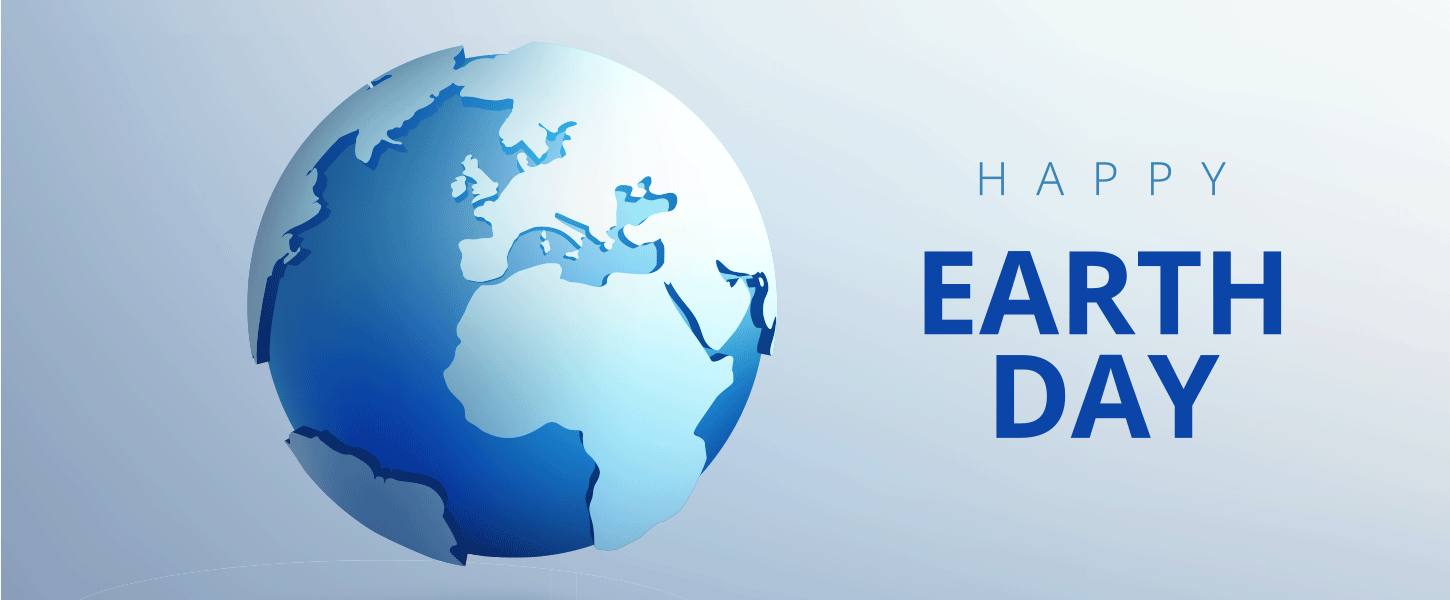
Earth Day is celebrated annually on April 22nd.
Celebrating Earth Day 2026
Earth Day, celebrated annually on April 22nd, is a global event dedicated to raising awareness about environmental issues and promoting actions to protect our planet.
This year’s theme is ‘Our Power, Our Planet’, which serves as a global reminder of the responsibility we share in safeguarding the planet. While climate change, deforestation, and pollution often dominate the conversation, water deserves equal attention as it is our most vital resource.
Freshwater systems sustain ecosystems, agriculture, industry, and human life itself. Yet, despite its importance, water is increasingly under threat from overuse, contamination, and climate instability. Focusing on water sustainability is not just an environmental concern; it is a prerequisite for long-term human survival and economic stability.
The Importance of Water Conservation
Water is an essential resource for all forms of life, and its conservation is crucial for maintaining ecological balance. Industrial processes account for a significant portion of water usage worldwide, often leading to the depletion of fresh water sources. Moreover, untreated industrial wastewater can introduce harmful contaminants into ecosystems, posing a threat to both human and environmental health. Therefore, the need to conserve water and prevent pollution has never been more urgent.
According to National Geographic, only 2.5% of the Earth’s water is freshwater, and a significant portion of that is locked away in glaciers or deep underground. What remains accessible in rivers, and lakes is under mounting pressure.
Rapid population growth and urbanisation have increased demand, and the UN estimates by 2050, water demand is projected to increase by 20-30%. In addition, industrial activities and agricultural runoff have degraded water quality. In many parts of the world, water scarcity is no longer a distant risk, it is a present reality.
Climate Change
Climate change compounds these challenges. Altered rainfall patterns, prolonged droughts, and more intense storms disrupt natural water cycles. Regions that once relied on predictable seasonal rains now face uncertainty, making water management more complex. Melting glaciers, which serve as natural freshwater reservoirs for millions, are diminishing at alarming rates. As a result, communities that depend on these sources must adapt quickly or face severe shortages.

According to the UN, water demand is projected to increase by 20-30% by 2050.
Sustainability
Sustainability in water management means balancing current needs without compromising the ability of future generations to meet theirs. This requires a multi-layered approach involving conservation, innovation, and policy reform. On an individual level, reducing water waste is a straightforward but impactful step. Simple actions such as fixing leaks, using water-efficient appliances, and being mindful of daily consumption can collectively make a substantial difference.
Agriculture, which accounts for roughly 70% of global freshwater use, represents a critical area for improvement. Sustainable practices such as drip irrigation, rainwater harvesting, and soil moisture monitoring can significantly reduce water waste while maintaining crop yields. Similarly, industries are increasingly adopting water recycling and closed-loop systems to minimise their environmental footprint.
Policy and governance are equally important. Effective water management requires cooperation across local, national, and international levels. Regulations that limit pollution, incentivise conservation, and ensure equitable access are essential. Water is not just a commodity; it is a shared resource that must be managed collectively.
How Arvia is Pioneering Water Reuse
Arvia is at the forefront of developing innovative solutions for water treatment. By focusing on the removal of contaminants from wastewater, Arvia enables industries to reuse water efficiently, thereby reducing their water footprint and environmental impact. Their patented technology offers:
- Efficient Contaminant Removal: Arvia’s technology is capable of removing persistent organic pollutants, pharmaceuticals, and other complex compounds that are often resistant to conventional treatment methods.
- Cost-Effective: By enabling water reuse, industries can lower their operational costs associated with water procurement and wastewater treatment.
- Environmentally Friendly Operations: The process reduces the volume of sludge generated, minimising the environmental impact of disposal and decreasing greenhouse gas emissions.
- Scalability: Arvia’s solutions are adaptable to various industrial applications and can be scaled according to specific needs, making them versatile for different sectors.
Conclusion
As we celebrate Earth Day, it’s important to recognise the potential of technology in driving environmental conservation. Arvia Technology exemplifies how innovative solutions can address the challenges of water scarcity and pollution. By investing in such technologies, industries can help secure a sustainable future, ensuring that clean water remains a readily available resource for generations to come. Let Earth Day inspire us all to adopt practices that protect our precious planet and its vital resources.
More featured articles
03.30.2026
This blog evaluates micropollutants in agriculture and why removal is essential for sustainable food production and environmental protection.
03.18.2026
This article discusses the threats of PFAS in agriculture and how these forever chemicals are entering the food chain.
07.30.2025
This article explores PNEC and the role it plays as a benchmark for determining the safety levels of various substances in urban wastewater.
Our wastewater treatment expertise
Our water technology can be used to treat a variety of water treatment applications. Once we understand the nature of your wastewater and your final water quality target, our water treatment specialists can make recommendations as to how best to treat your water. Take a look at some of the Nyex applications here:
Need help? Speak with an expert