Articles / Battery Recycling / insights / Water pollution / Water technology
Effects of Improper Battery Disposal on Aquatic Life
Effects of Improper Battery Disposal on Aquatic Life
October 29, 2025
Effects of Improper Battery Disposal on Aquatic Life
Lithium-ion batteries are ubiquitous in modern life, powering everything from small household gadgets to electric vehicles. However, incorrect disposal of these energy sources poses significant environmental and health risks. Understanding these effects is crucial for promoting responsible recycling practices and safeguarding our planet.
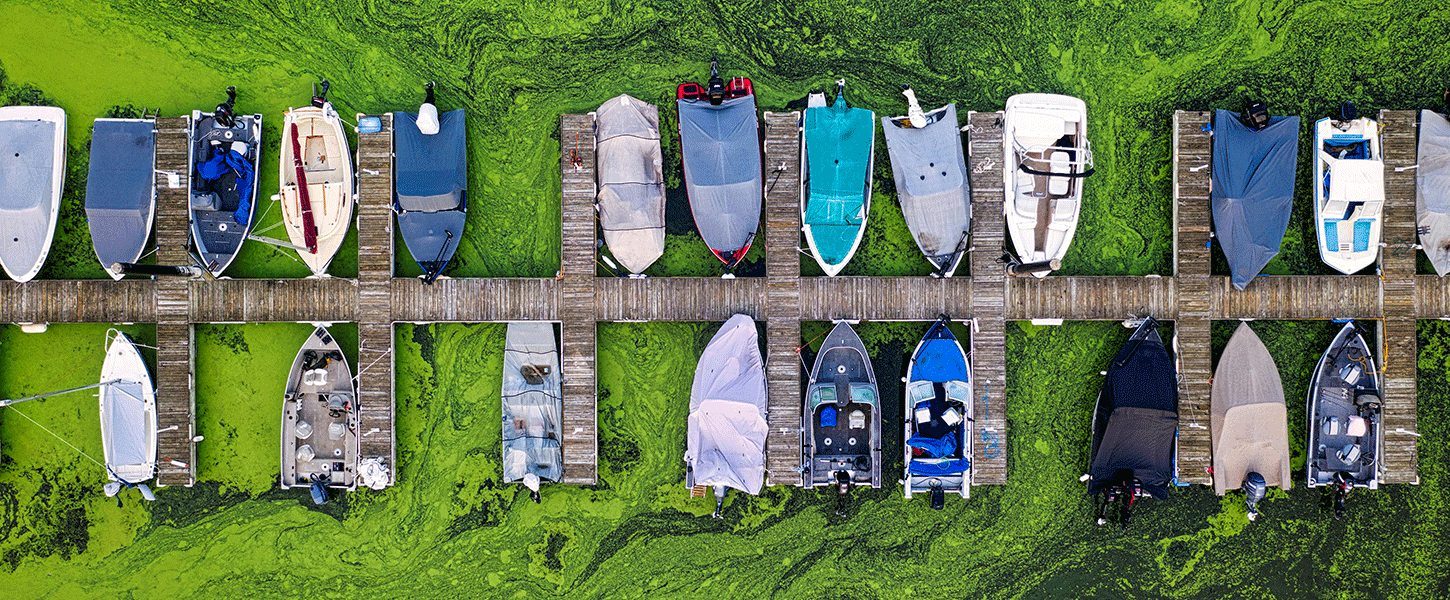
Excessive nutrients from battery components can promote algal blooms.
Effects of Improper Battery Disposal on Aquatic Life and Other Animals
Improper battery recycling can have devastating impacts on the environment, particularly affecting aquatic life and other animals. Lithium-ion batteries contain toxic substances that, when not disposed of properly, can leach into ecosystems, causing harm to wildlife and disrupting natural habitats.
Harmful Substances in Batteries
Chemical Leachate
When lithium-ion batteries are disposed of incorrectly, they can release harmful chemicals into the environment. These batteries contain metals such as lithium, cobalt, nickel, and manganese, which can leach into the soil and groundwater. This leachate can contaminate water supplies and soil, affecting plant life and agriculture.
Greenhouse Gas Emissions
Improper battery disposal can lead to increased greenhouse gas emissions. When batteries are burned in incinerators, they release toxic fumes, including carbon dioxide and other greenhouse gases, contributing to climate change.
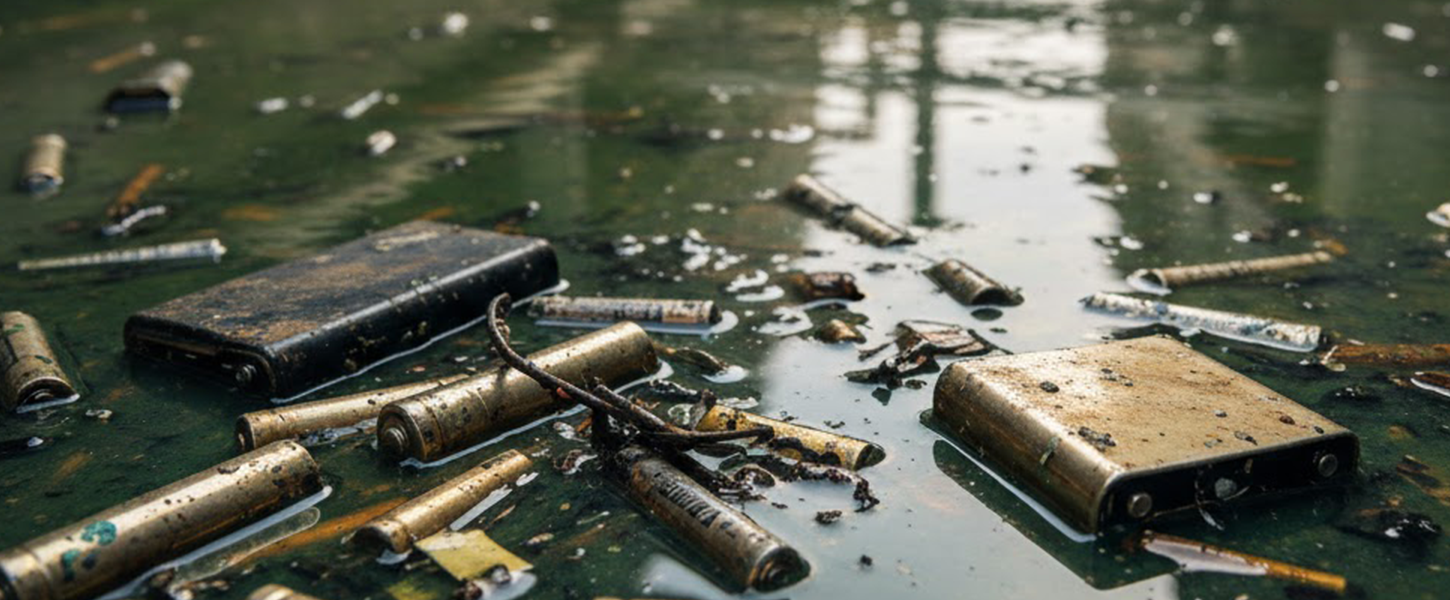
Incorrect battery disposal can have devastating impacts on the environment.
Impact on Aquatic Life
When batteries are improperly disposed of, these toxic substances can leach into water bodies, affecting aquatic organisms at various levels:
- Algal Blooms: Excessive nutrients from battery components can promote algal blooms, depleting oxygen levels in the water and suffocating fish and other marine life.
- Bioaccumulation: Toxic metals accumulate in the bodies of smaller aquatic organisms, which are then consumed by larger predators. This process magnifies the concentration of toxins in the food chain, affecting apex predators and potentially humans who consume seafood.
- Habitat Destruction: Acidic and toxic leachate from batteries can alter the pH of water bodies, leading to habitat loss for sensitive species such as amphibians and certain fish.
Effects on Terrestrial Animals
Incorrect battery disposal can also impact terrestrial animals, especially those living near landfills or in areas where batteries are discarded:
- Soil Contamination: When toxic substances from lithium-ion batteries leach into the soil, they can be absorbed by plants. Herbivorous animals that consume these plants can accumulate toxic metals in their bodies, leading to health issues such as organ damage, reproductive problems, and even death.
- Water Source Contamination: Animals that drink from contaminated water sources can suffer from poisoning and long-term health issues.
- Food Chain Disruption: The contamination of soil and plants can disrupt terrestrial food chains. Predatory animals that consume affected herbivores can also suffer from the effects of metal toxicity, leading to a decline in predator populations and imbalances in the ecosystem.
Prevention and Clean up
To mitigate these adverse effects, proper recycling and disposal of batteries are crucial. Here are some steps that can be taken:
- Public Education: Increase awareness about the importance of battery recycling and the proper disposal methods.
- Recycling Programs: Establish convenient and accessible battery recycling programs and drop-off locations for consumers.
- Regulations and Enforcement: Implement and enforce regulations that ensure manufacturers and consumers adhere to safe battery disposal practices.
How Arvia can help
Arvia’s Ellenox™ systems can offer a permanent and easy-to-commission solution for polluted water used in battery recycling. The lithium batteries contain a wide range of recalcitrant organics, and their Nyex technology can remove over 95% of TOC from the battery wastewater.
This means water reuse in any recycling plant will increase considerably, and water sent to the sewers or watercourses will be well within current environmental limits.
Arvia’s systems can be retrofitted in various positions within a water treatment train and have the benefit of no moving parts and requiring little maintenance. They also have the advantage of not requiring tip-ins of hazardous materials.
For more information visit our Battery Recycling page.
Conclusion
Incorrect disposal of lithium-ion batteries poses significant threats to the environment, aquaculture, and terrestrial animals. It is crucial to promote proper recycling and disposal practices to mitigate these adverse effects. Public awareness and stricter regulations can help ensure that these batteries are disposed of responsibly, protecting our ecosystems and the biodiversity they support.
More featured articles
09.1.2025
This article explores the circular society and will discuss the new rules for recycling efficiency and material recovery from waste batteries.
09.15.2025
This article explores the EU Battery Regulation and will discuss the objectives, key provisions and the enforcement of the regulations.
07.7.2021

Why any company that discharges water needs to be ready to be put under the microscope.
Our wastewater treatment expertise
Our water technology can be used to treat a variety of water treatment applications. Once we understand the nature of your wastewater and your final water quality target, our water treatment specialists can make recommendations as to how best to treat your water. Take a look at some of the Nyex applications here:
Need help? Speak with an expert